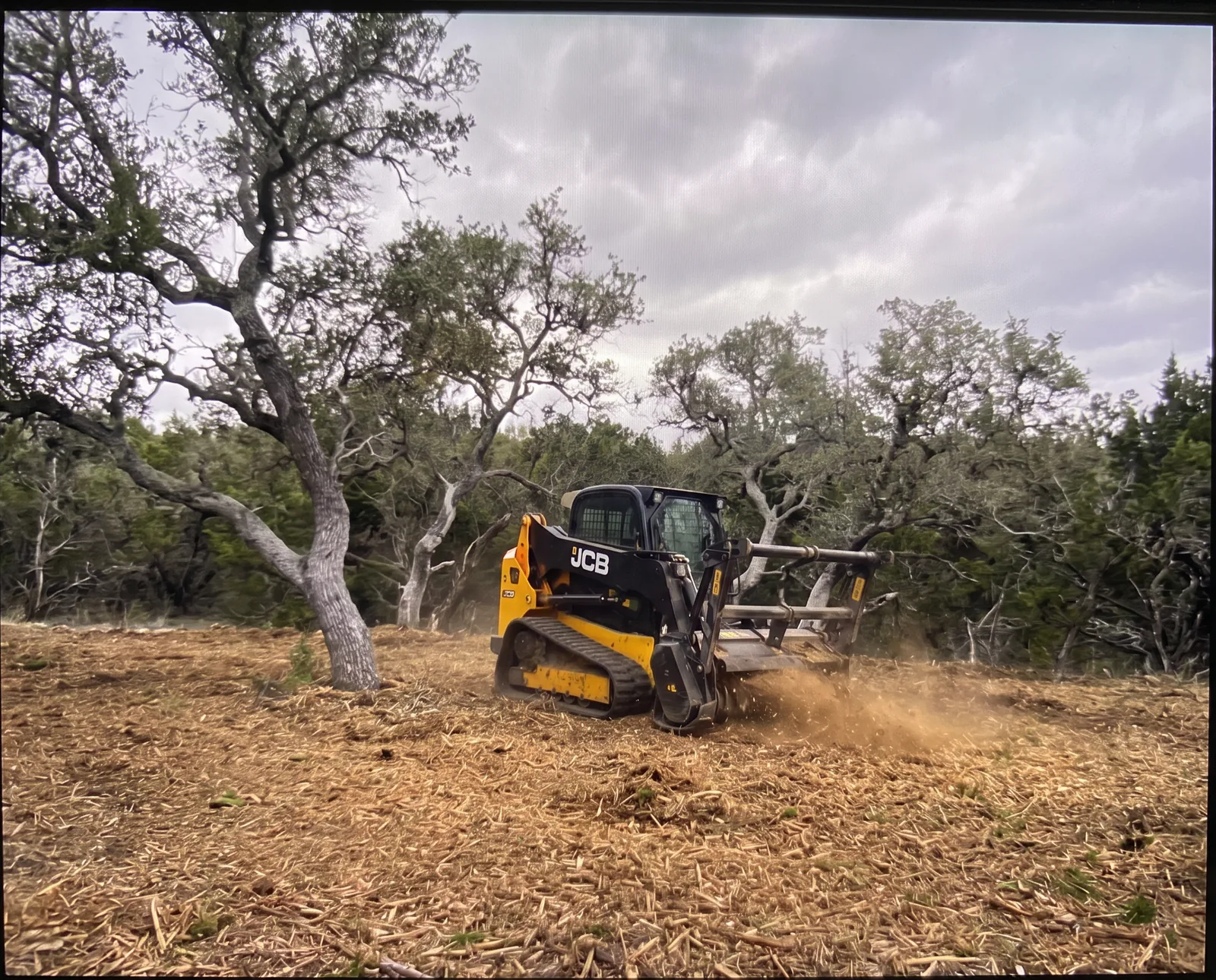
Thinking about clearing your Central Texas property yourself to save money? Once you add up equipment rental, fuel, delivery, debris disposal, damage liability, and days of labor, DIY land clearing often costs about the same as hiring it done — but takes weeks instead of a day, with all the risk on your shoulders. For most jobs, hiring it isn't the expensive option.
Clearing land in Central Texas sounds simple until you actually price it out. The good news for landowners is that you can rent the equipment now — including a forestry mulcher. So the question isn't "can I rent it," it's "does renting it actually save me money once I count everything?" We clear this land every week, so here's the honest breakdown — real numbers, real risks, and where DIY actually wins.
Key takeaways
- You can rent a forestry mulcher, a skid steer, or a brush cutter — but once you add the head, fuel, delivery, damage risk, and your own inexperience, a DIY mulching day rarely beats hiring it done.
- Professional forestry mulching in Central Texas typically runs $1,500–$6,000 per acre depending on density, terrain, and rock — often close to what a real DIY attempt costs once everything's totaled, but finished in a day with no cleanup.
- The forestry mulcher does it all in one pass: it grinds standing brush, saplings, and small trees into mulch that stays on your ground. No cutting, no piling, no hauling, no burning.
- The two costs people never price in: the damage you're liable for (rock and hidden metal destroy mulcher teeth — and that's on you with a rental), and the time you'll lose learning a machine a pro already knows cold.
- DIY genuinely makes sense in a few specific cases. We'll tell you exactly where that line is.
The Real Apples-to-Apples: Renting a Mulcher vs. Hiring One
Most DIY-vs-pro articles cheat. They compare you with a chainsaw to a pro with a mulcher, which makes the pro look automatic. But that's not the choice you're really weighing — today you can walk into a rental yard and rent the same class of equipment. So let's compare it straight.
Option 1 — Rent a forestry mulcher (skid steer + mulching head)
- Machine + mulching head: $650–$1,200/day
- Delivery both ways: $150–$400
- Diesel fuel: $100–$180/day
- Damage deposit held: $1,500–$3,000 (and you eat any damage)
- All-in: roughly $900–$1,600 for one day — before you've cleared a thing.
Sounds close to a pro quote, right? Here's the catch: an experienced operator will clear two to four times more ground per hour than a first-timer. You'll spend your first two hours just learning the controls, the reach, and how the head feeds. A day you paid full price for might clear half an acre. A pro clears that same half-acre in a couple hours because they've done it a thousand times.
Option 2 — Rent a skid steer and a brush cutter (the cheaper-looking route)
- Skid steer with brush grapple: $300–$550/day
- Brush cutter attachment: $140–$180/day
- Chainsaw for the bigger stuff: $50–$100/day
- Truck + trailer to haul debris (if you don't own one): $75–$150/day
- Fuel: $150–$300/day
But notice what this option doesn't do: it doesn't mulch. A brush cutter knocks material down; a grapple piles it. You still have to cut, pile, and then deal with the debris — which brings us to the cost nobody plans for.
The Debris Problem DIY Always Underestimates
When you cut and pile instead of mulch, the material has to go somewhere:
- Landfill drop-off: $50–$150 per trailer load — and one acre of medium cedar makes far more loads than you'd guess.
- Total disposal: easily $400–$1,200 per acre.
- Burning: needs a permit ($25–$100), and in Central Texas that means dodging burn bans all summer, babysitting a fire for days, and taking on real liability if it gets away from you. A cedar pile is a match on your property. (Here's the full rundown on the hazards of burning brush.)
This is where mulching wins outright. A forestry mulcher grinds everything into a mulch layer that stays right on the ground. There's no debris, because there's no pile — no hauling, no landfill fees, no burn permit, no smoke. The material you'd have paid to get rid of becomes erosion cover and soil nutrition instead.
The Cost Nobody Warns You About: Damage Liability
This is the one that bites DIYers hardest, and it's the reason we bring our own insured machine. Central Texas ground is full of rock, caliche, and hidden metal — old fence wire, T-posts, buried junk. A mulching head runs steel teeth at high speed, and when those teeth hit a rock or a chunk of buried pipe, they chip, crack, or snap. A full set of mulcher teeth can run several thousand dollars. On a rental, that damage comes straight out of your deposit and then some — the rental yard doesn't care that you didn't see the rock.
And it's not just the machine:
- Miscut a tree and it comes down on your fence, your shed, or your truck.
- Clip your septic line, well head, or a buried utility you forgot was there.
- Standard homeowner's insurance usually won't cover it — most policies exclude damage from your own heavy-equipment operation. That claim gets denied.
When we do the work, our teeth, our machine, and our liability insurance are our problem — not yours. That's a big part of what your quote actually buys.
Time: The Second Shock
Equipment cost is the first surprise. Time is the second. Clearing one acre of medium Central Texas brush the DIY way — cut, pile, haul or burn, handle stumps — realistically runs 50 to 90 hours of hard physical labor, usually stretched across a month of weekends in the Texas heat. A professional mulching crew does that same acre in a single day, often 4 to 8 hours, with nothing left to clean up. If you've got a construction timeline, a closing date, or just a life to get back to, that gap decides it.
The Safety Reality
Land clearing is genuinely dangerous work, and it's worse when you're learning on the fly:
- Chainsaw kickback and misjudged tree falls — pros read lean, crown weight, and root structure; first-timers guess.
- Skid-steer rollovers on Central Texas slopes and uneven ground.
- Heat exhaustion doing hours of heavy labor in a Texas summer.
- Snakes — disturbed brush piles are exactly where rattlesnakes hole up, and you're reaching right into them.
A pro does this every day with the training, the machine cab, and the read on the land to do it safely.
When DIY Actually Makes Sense
We'll be straight with you — sometimes DIY is the right call:
- The area is under a quarter acre with only light brush and grass, nothing much over a few feet.
- You already own the equipment — you're not renting.
- You've got real chainsaw and machine experience and the safety gear.
- There's no deadline and a solid plan for the debris.
- It's ongoing maintenance, not a first big clearing.
If that's you, have at it. Renting a brush cutter for a light afternoon can be a fair deal, and there's no reason to pay someone for a job you can knock out safely yourself.
For Most Central Texas Land, Hiring It Done Wins
Line it up honestly. A real DIY mulcher rental runs $900–$1,600 a day for a machine you don't know how to run, on ground full of rock that can cost you your deposit, and you'll clear a fraction of what an experienced operator does in the same day. The cut-and-haul route looks cheaper per day but buries you in disposal fees, burn-ban headaches, and weeks of weekend labor in the heat. Either path carries real injury risk and damage liability your homeowner's policy likely won't touch.
Professional forestry mulching in Central Texas runs $1,500–$6,000 per acre for typical conditions — often right in line with what an honest DIY total actually comes to — but it's done in a day, with no cleanup, no hauling, no burning, and no damage risk on your shoulders. And the land comes out better than when we started, because the mulch feeds the soil and holds it in place instead of leaving you bare dirt and a burn scar. (See the full pricing guide and what drives land clearing cost.)
Bottom line: for a small patch of light brush with your own gear, DIY is a fair call. For just about everything else in Central Texas — dense cedar, mixed hardwoods, rocky ground, or a real deadline — hiring it done isn't the expensive option. It's the one that costs less once everything's on the table, and you get your weekends back.