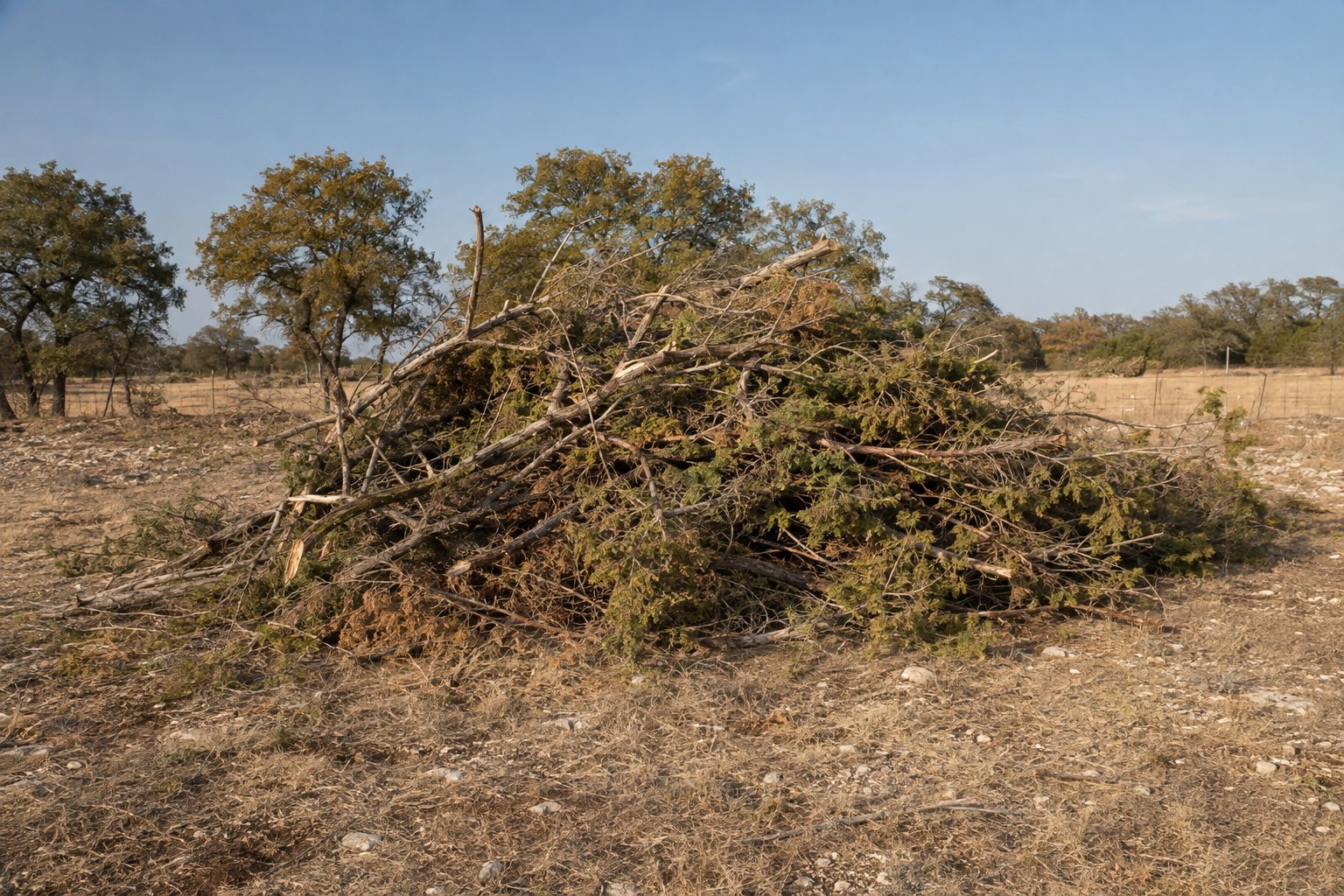
Burning a brush pile in Central Texas isn't as simple as lighting a match. Between burn bans, dry ground, and wind, a pile can sit for weeks as a fire hazard — and once it's lit, embers can carry on the wind, jump to dry grass, and reach your neighbor's property. Forestry mulching removes the pile and the risk in a single pass.
If you've cleared land in Central Texas, you know the drill: the trees come down, the brush stacks up, and somebody says, "We'll just burn it later." Out here, where everybody's got a little country in them, burning feels like the natural, free way to deal with it. But "later" can mean weeks of a giant tinder pile sitting on your property, waiting for a safe day that may never come — and when it finally does burn, it's a lot more work and a lot more risk than most folks expect.
It's Dry Out Here — And That Pile Isn't Going Anywhere
Central Texas spends a big chunk of the year bone dry. Between drought, heat, and wind, counties across the region sit under burn bans for weeks or months at a stretch. When the county's under a ban, that brush pile is legally frozen in place — you can't touch it with a match. So the pile sits. And sits. Sometimes the material has to stay on your property for a month or more until you finally get enough wet weather to burn it legally and safely. Meanwhile it dries out, settles, and critters move in. It's become a fire hazard just by existing on your land — one stray spark, one dropped cigarette, one lightning strike, and it goes up on its own terms instead of yours.
Burning Isn't "Light It and Walk Away"
This is the part people underestimate. Burning a pile the right way in Texas is a job with a checklist, and you're legally on the hook for every step. Before you ever strike a match you're expected to:
- Check the burn ban first. If your county is under a ban, you cannot burn — period. Verify your county's current status before you do anything.
- Get any required permit and notify your local fire department or dispatch before you light.
- Watch the wind and weather. No burning in windy conditions, and keep smoke from drifting onto roads or a neighbor's place.
- Respect setback distances from structures and property lines.
- Have water and tools on hand — a charged hose, a tractor, shovels — before the first flame.
- Stay on site and attend the fire from the first flame until it is dead out — not just smoldering.
That's hours of your day, standing there watching a fire in the Texas heat. It takes time, it takes energy, it takes money — and it's dangerous. Miss a step and you're looking at fines, liability, or the nightmare scenario: a fire that jumps the pile and runs across dry grass onto your neighbor's fence, their barn, or worse. In Coryell, Bell, and Lampasas counties, that dry grass moves fast, and embers ride the wind farther than most people think.
Knocking It Down or Chainsawing a Pile Just Moves the Hazard
We see it all the time. Somebody runs a dozer through the brush and windrows it into a giant mound, or spends a weekend with chainsaws and leaves a mountain of limbs "to burn later." That's not clearing your land — that's relocating the hazard and kicking the can down the road. A dozer pile is packed full of dirt, so it burns dirty, slow, and incomplete. A chainsaw pile is loose, tall, and unpredictable once it's lit. Either way, you've traded standing brush for a giant fuel stack that now has to be babysat and burned.
Why Forestry Mulching Beats Burning Every Time
This is why we mulch. Forestry mulching grinds brush, saplings, and small trees right where they stand and turns them into a layer of mulch on the ground — no pile, no match, no smoke, no waiting. One problem (a pile of brush), one solution, one pass. Here's what you get instead of a burn pile:
- No burn pile and no open flame — nothing to ignite, babysit, or jump the line to your neighbor's property.
- No burn-ban delays. We work when you need it done, not when the county finally allows a fire.
- No dirty dozer piles or limb mountains left behind to deal with later.
- The mulch improves your soil — it holds moisture, reduces erosion, and breaks down into the ground over time.
- One pass, done. Land left open, walkable, and usable the same day.
Burning turns your brush into a weeks-long liability. Mulching turns it into ground cover in a single afternoon. If cutting your overall fire fuel is the goal, that's worth understanding on its own — see our guide to forestry mulching and wildfire defense.
The Bottom Line for Central Texas Landowners
If you're planning to clear land and burn the debris, think twice. The burn-ban calendar, the liability exposure, the hours of babysitting a fire, and the incomplete burn you'll end up with make it one of the most frustrating — and riskiest — ways to deal with brush on a Central Texas property. There's a better way. You get your land back the same day, with none of the fire risk hanging over it.