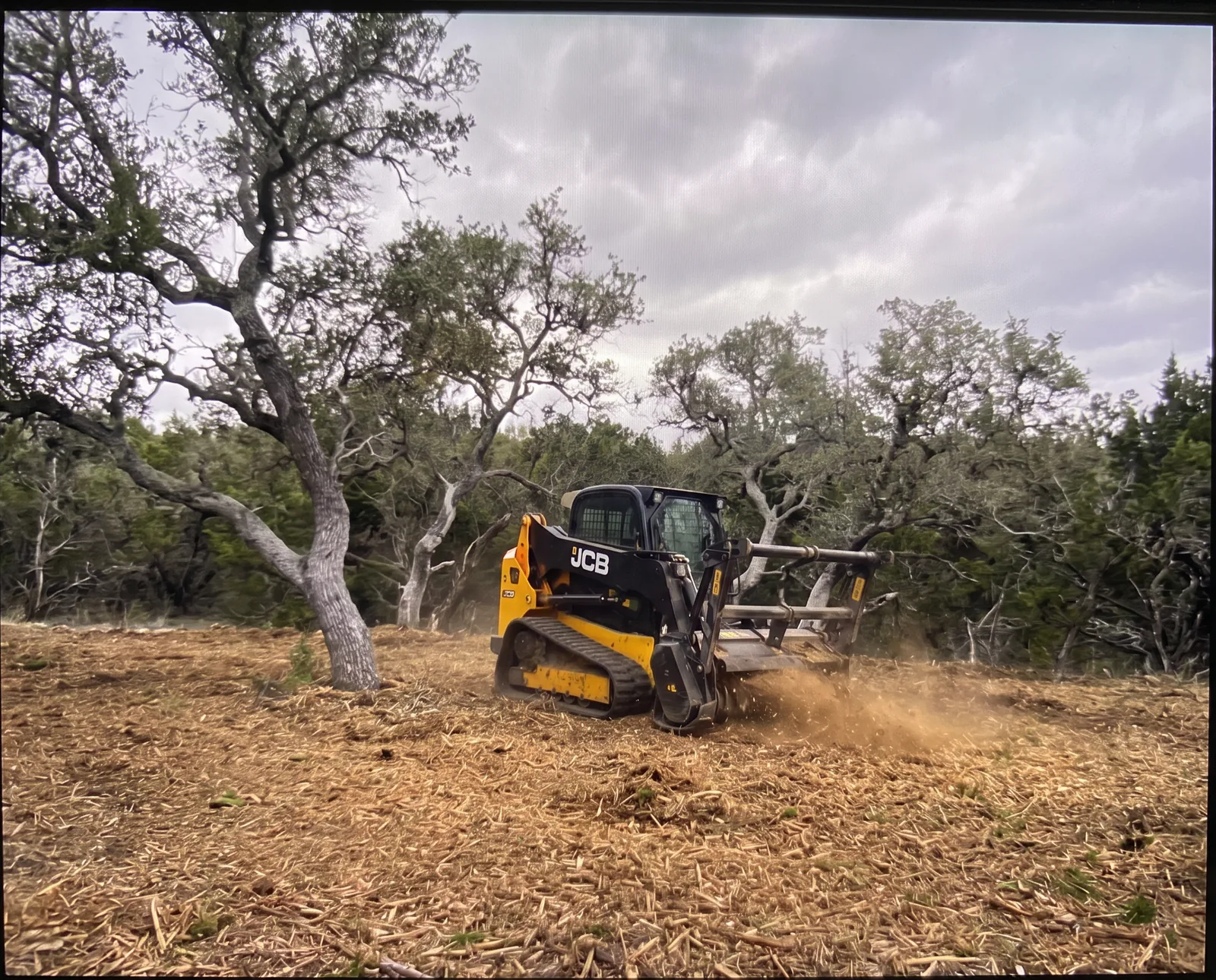
Forestry mulching feeds your soil instead of stripping it. It grinds brush into a chip layer that stays on-site, returning nutrients to the ground as it breaks down while shielding the surface from heat, erosion, and moisture loss. That's the opposite of what dozing, burning, or hauling do — they leave the soil bare, compacted, and depleted.
Most Central Texas landowners focus on what forestry mulching removes from their property. The cedar. The scrub brush. The thorny tangle that has been creeping toward the fence line for years. What they don't always expect is what the process leaves behind — that layer of chips settling into the soil — and what it quietly does to the ground underneath.
Key takeaways
- Forestry mulching returns organic material directly to the soil, boosting fertility, structure, and moisture retention without stripping the land bare.
- In Central Texas, where heat and drought put serious pressure on soil, the mulch layer acts as a natural buffer that keeps moisture in and erosion out.
- Mulching suppresses invasive species like cedar and native weed competitors, giving local plants a better shot at establishing.
- Traditional clearing — dozing, burning, and hauling — actively damages soil structure; forestry mulching avoids all three.
- The post-mulch timeline holds more than most landowners expect: how the soil recovers over the weeks and months after one pass is where the real story unfolds.
Your Soil Gets a Nutrient Boost, Not a Strip-Down
Traditional land clearing is brutal on soil. When a dozer pushes through, it compacts the ground, buries topsoil, and strips away the organic layer that took decades to build. Burning significantly reduces organic matter and destroys many nutrients. Hauling takes organic material off-site, leaving nothing behind.
Forestry mulching does the opposite. The machine — a rotating drum fitted with steel or carbide teeth — shears vegetation at or near ground level and grinds it into chips right where it stands. Those chips stay on-site. As they break down over the following months, they release a steady supply of nutrients back into the soil, improving fertility naturally. Fecon, a leading manufacturer of forestry mulching equipment, describes this plainly: organic material returned to the ground creates a nutrient-rich environment that supports healthy plant growth and a thriving ecosystem. That's basic decomposition chemistry, and it works the same way on a Hill Country ranch as it does anywhere else.
How Mulch Rebuilds Soil Structure
Soil is a layered system of particles, air pockets, water channels, and microbial life. Disrupt that structure and the result is compacted, lifeless ground that sheds water instead of absorbing it. Forestry mulching protects that system at every step.
Prevents Compaction
Because mulching equipment grinds material in place rather than pushing it over, the root systems below stay intact. There's no heavy dozer blade dragging across the surface, no hauling truck making repeated passes. The ground underneath is left largely undisturbed, which means the existing soil structure — the air pockets, the root channels, the microbial networks — remains functional.
Improves Aeration and Drainage
The chip layer that settles on the surface is porous by nature. It lets air move through the soil rather than sealing it off. For the clay-heavy soils common in parts of Central Texas, that improved infiltration matters because water can move down into the profile instead of sheeting off the surface. On the sandier soils found elsewhere in the region, decomposing organic matter helps slow percolation and keeps moisture available longer at the root zone.
Moisture Retention: Critical in Central Texas
Central Texas summers are punishing. Extended stretches without meaningful rain, combined with high evaporation rates, can dry out exposed soil in a matter of days. Land cleared by conventional methods, with no protective cover left behind, is especially vulnerable.
Mulch as a Natural Sponge
The chip layer left by forestry mulching acts as insulation for the soil surface. It absorbs rainfall during wet periods and holds onto that moisture as conditions dry out. Research cited by the University of Saskatchewan found that an organic mulch blanket as thin as six inches can produce measurably more consistent soil temperatures and reduced moisture loss — a finding that applies directly to the kind of heat Central Texas landowners deal with every summer.
Reducing Surface Evaporation
Bare soil loses moisture fast when the sun hits it directly. The mulch layer blocks that direct exposure and reduces evaporation at the surface. For pasture establishment or native grass recovery after clearing, that retained moisture makes the difference between seed that germinates and seed that desiccates before it ever has a chance.
Erosion Control That Actually Works
Erosion is one of the less visible consequences of aggressive land clearing, but it's one of the most damaging. Once topsoil moves, it doesn't come back quickly, and on sloped terrain it can move fast.
The mulch layer that forestry mulching leaves behind acts as a physical barrier between the soil surface and the forces that erode it: rainfall impact, runoff, and wind. Some soil-management research cites mulch blankets reducing sediment loss on slopes by 30 to 50 percent, with certain studies reporting higher reductions under specific conditions. In practical terms, a Central Texas property with any kind of grade — limestone outcroppings, creek-adjacent land, or rolling terrain — holds together after a clearing pass rather than washing into the drainage after the first hard rain. Stumps cut low rather than pulled out also help: no holes in the ground, no disrupted soil structure, and no ruts left behind by hauling equipment.
Native Plants Win When Invasives Lose
Central Texas has a well-documented invasive species problem. Ashe juniper — locally called cedar — is the most visible offender, but native weed competitors, invasive grasses, and thorny brush species crowd out the local flora that ranches and wildlife habitats depend on.
Suppressing Invasive Species
Forestry mulching removes invasive vegetation efficiently without burning. While it often reduces the need for herbicide application, species with aggressive root systems may require targeted follow-up treatment to prevent regrowth. The machine grinds vegetation down at ground level, and the resulting chip layer physically blocks light from reaching seeds below, suppressing regrowth of invasives that rely on sunlight to establish. Cedar, for example, may push back from the roots, so a follow-up pass is often part of a realistic management plan rather than a sign the first pass failed. (More on that in our guide to slowing cedar regrowth and our cedar removal service.)
A Nutrient-Rich Seedbed for Local Flora
After invasive competition is removed and the chip layer begins to break down, what remains is a loosened, nutrient-enriched seedbed that native plants are well-adapted to colonize. Grasses, forbs, and shrubs that were previously shaded out or outcompeted suddenly have the light, space, and soil fertility they need. Fecon notes that the mulch layer gives native plants a nutrient-rich place to grow, boosting biodiversity and restoring natural habitats — a direct benefit for ranchers working on pasture reclamation or landowners restoring wildlife habitat.
What the Land Looks Like After One Pass
Before mulching, a neglected Central Texas parcel is typically dense with cedar, scrub oak, and thorny brush — no visibility, no safe passage, no usable grazing. After one pass, the same ground opens up. Mature trees that were marked ahead of time are still standing. The ground between them carries an even layer of light-colored chips, and sight lines return across the property.
Stumps Left Low, Soil Structure Intact
Stumps are cut flush with the surface rather than pulled out. No root balls extracted means no voids left in the ground and no hauling equipment needed for removal. The soil underneath stays where it is. Over the following 6 to 18 months — longer in dry conditions, faster when rainfall is consistent — the chip layer begins to knit down and darken as initial decomposition occurs. Full decomposition and integration into the soil can take several years. By the time the layer has settled, the soil underneath is measurably more fertile than it was before the clearing happened.
Forestry Mulching Outperforms Traditional Clearing for Soil
The comparison is not subtle. Dozing compacts soil, buries topsoil layers, and leaves the ground exposed. Burning significantly reduces organic matter and destroys many nutrients. Hauling removes it entirely. All three leave landowners with bare, compacted, nutrient-depleted ground that requires active intervention — fertilizer, seeding, and erosion control — just to recover to a functional state.
Forestry mulching does the opposite on each count. Soil structure is preserved. Organic material stays on-site and feeds the ground as it decomposes. The chip layer manages moisture and erosion from the moment the machine finishes its pass. Restoration begins immediately rather than after an extended recovery period.
Central Texas Soil Deserves This Approach
Central Texas land presents a specific set of challenges: shallow soils over limestone, heat-driven moisture loss, aggressive invasive species, and terrain that doesn't forgive erosion. Forestry mulching addresses all of them in a single pass, without the collateral damage that comes with conventional clearing. The soil comes out of the process healthier than it went in — better structured, better fed, and better protected against the conditions that make land management in this region so demanding.