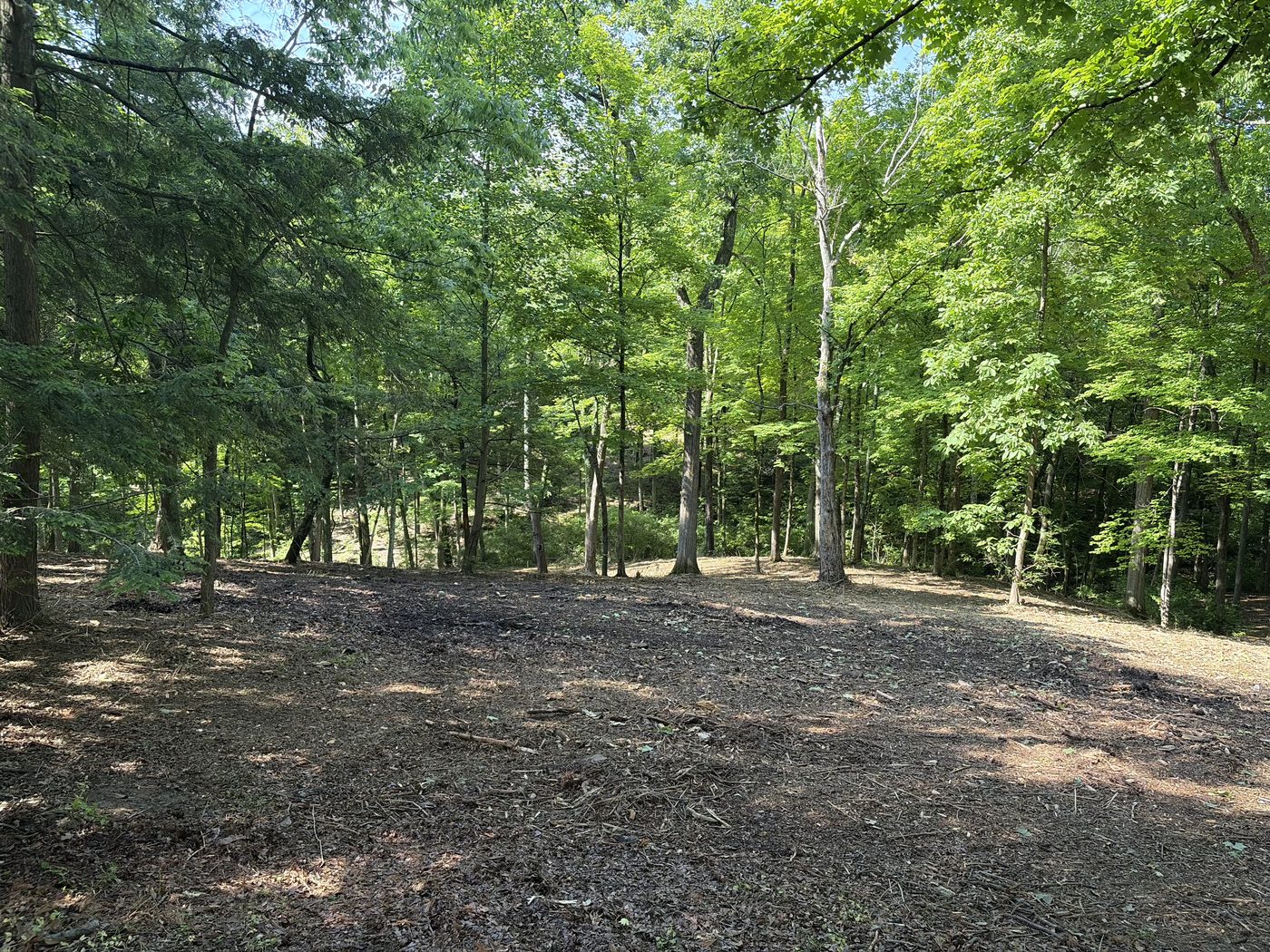
You slow cedar regrowth by combining methods, not relying on one. Because Ashe juniper returns from seed rather than stumps, the strongest approach stacks forestry mulching — its mulch layer shades new seedlings — with herbicide, prescribed fire, seasonal timing, and scheduled maintenance. No single treatment gives permanent control.
You've cleared your Texas property once, spent thousands, and now the cedar is back. But here's the critical detail most landowners miss: Ashe juniper doesn't resprout from stumps like other brush. Understanding how it actually returns changes everything about controlling it long-term.
Key takeaways
- Ashe juniper — what Texans call "cedar" — comes back primarily through prolific seed dispersal, not stump resprouting, which changes how control efforts should be targeted.
- Forestry mulching leaves a 2–3 inch ground cover layer that blocks sunlight from seeds and slows new cedar establishment better than brush cutting alone.
- No single clearing method provides permanent control — combining mechanical clearing with herbicide, fire, and seasonal timing delivers the best long-term results.
- A scheduled maintenance plan, like the Clear & Keep Plan, is the most practical way to stay ahead of cedar without letting it take over again.
Cedar encroachment is one of the most stubborn and expensive land management challenges Central Texas landowners face. The good news is that while cedar doesn't quit, it can be slowed down with the right combination of methods — and understanding how cedar actually comes back is the first step to making real, lasting progress.
Cedar Doesn't Quit — But You Can Slow It Down
Anyone who has cleared cedar and walked the same ground two years later knows the frustration. The brush is back. Not all of it, but enough to remind you that cedar plays a long game. Left unmanaged, Ashe juniper — the species Texans broadly call cedar — can convert open rangeland into dense, impenetrable brush in a matter of years, choking out grasses, consuming water, and shrinking the usable acreage you're paying taxes on every season.
The encouraging reality is that regrowth can be meaningfully slowed. Not stopped forever with a single effort, but slowed — and eventually kept in check — through methods that work with the biology of the plant rather than ignoring it.
Why Cedar Regrowth Is So Aggressive
Ashe Juniper: Central Texas's Relentless Native
Ashe juniper is native to the Texas Hill Country and surrounding regions, which means it's perfectly adapted to the thin, rocky soils and boom-bust rainfall patterns of Central Texas. It outcompetes grasses for moisture, tolerates drought, and produces enormous quantities of seed every year. Cedar waxwings and other birds spread those seeds across cleared ground with remarkable efficiency — making every neighboring untreated property a seed source.
Seeds, Not Stumps: How Cedar Really Comes Back
Here's a critical distinction that changes how clearing should be approached: Ashe juniper does not typically resprout from cut stumps. Unlike many brush species that send up new shoots after being cut, cedar regrowth is driven almost entirely by seed germination and rapid seedling establishment. Once those seedlings take hold and develop root systems, they become increasingly difficult and expensive to remove.
This matters because clearing a property is only the beginning. The cleared ground — now open and sunny — is actually ideal germination habitat for the next wave of cedar seeds blowing in. Managing that seedling pressure, not the stumps left behind, is where the real battle is won or lost.
Forestry Mulching vs. Brush Cutting
How a 2–3 Inch Mulch Layer Blocks New Seedlings
Forestry mulching grinds cedar and brush down into fine organic material distributed across the cleared ground. When that mulch layer reaches 2 to 3 inches of depth, it does something brush cutting can't: it blocks sunlight from reaching the soil surface, which is what cedar seeds need to germinate and establish. That suppression effect gives native grasses a window to recover and compete before new cedar seedlings can gain a foothold.
Excessively thick mulch layers can work against desirable grass growth by trapping too much moisture or creating an anaerobic surface. The goal is an even, moderate layer — enough to suppress cedar seeds while still letting the soil breathe and support pasture recovery. Done right, that same mulch retains moisture and breaks down over time to enrich the soil.
When Brush Cutting Makes Sense
Brush cutting — knocking down and clearing vegetation without grinding it — is faster and more affordable than forestry mulching, and it has a legitimate place in cedar management. It works well for initial-pass clearing on large acreage, for maintaining fence lines, or for properties where the goal is quick access rather than long-term suppression. The trade-off is straightforward: without the mulch layer, cleared ground is exposed and open to immediate seedling pressure. Follow-up treatment becomes more urgent when brush cutting is the primary method.
Other Methods That Slow Regrowth
Herbicide Treatments Targeting Roots
Basal bark and cut-stump herbicide applications are among the most effective tools available for cedar control, particularly because they target the root system directly. Applied correctly, these treatments can kill the plant at the root level and significantly reduce the chance of any regrowth from the treated stem. Agricultural extension research indicates that combining mechanical clearing with targeted herbicide application can produce substantially lower cedar regrowth over time compared to mechanical clearing alone — a meaningful result for landowners investing in long-term pasture recovery.
Prescribed Burning for Pasture Restoration
Prescribed fire has a long history as a land management tool across Central Texas ecosystems. It kills cedar seedlings efficiently and can top-kill larger plants, tipping the competitive balance back toward native grasses. Burns need to be carefully planned around fuel load, wind conditions, burn bans, and legal permitting — but for landowners with suitable acreage and grass cover to carry a fire, it remains one of the most cost-effective regrowth suppression tools available. Coordinating with a local agricultural extension office or experienced land manager before attempting a prescribed burn is strongly recommended.
Clearing Timing and Seasonal Factors
Research and agricultural extension guidance suggest that the season in which cedar is cleared can influence regrowth rates. Certain times of year — such as late spring through summer when cedar is actively growing — may be more effective for some control methods, particularly foliar and basal bark herbicide applications. Seasonal timing also affects whether the bare ground left behind falls during prime germination windows for new cedar seeds. Clearing ahead of the rainy season without a suppression layer in place can lead to rapid seedling establishment, making follow-up treatment more urgent.
No Single Method Is Enough
This is where most one-time clearing efforts fall short. Mechanical removal — whether forestry mulching or brush cutting — handles what's already there. Herbicide targets roots and reduces viable stumps. Prescribed fire suppresses seedlings and restores grass competition. Seasonal timing reduces regrowth pressure. None of these methods, applied alone, delivers sustained cedar control.
Integrated management — stacking methods based on the property's specific cedar density, land use goals, and budget — consistently outperforms any single-method approach. Agricultural extension research backs this up: properties managed with multiple complementary methods see dramatically better long-term outcomes than those relying on clearing alone.
Scheduled Maintenance: The Long-Term Answer
Even the best initial clearing, done with forestry mulching and herbicide follow-up, won't prevent new cedar seedlings from establishing over subsequent seasons. Seeds keep coming. The difference between a property that stays open and productive and one that's quickly re-encroached by brush often comes down to whether consistent maintenance is performed on schedule.
What the Clear & Keep Plan Covers
CHEW's Clear & Keep Plan is structured around this reality. Instead of reacting when the brush gets out of hand again, scheduled visits — 2, 4, or 6 per year depending on the tier — keep seedling pressure from compounding year over year. The plan locks your rate for 12 months, includes priority scheduling, and brings up to 25% off standard rates. The practical benefit goes beyond cost savings: cedar gets dealt with while it's still manageable, not after it's rebuilt the wall.
Ongoing Management Beats One-Time Clearing Every Time
Cedar encroachment is a process, not an event — which means controlling it is also a process. Landowners who see lasting results treat their property like the investment it is: clearing it right the first time, following up with methods that slow seedling re-establishment, and staying on a maintenance schedule before the brush dictates the terms again.
The methods covered here — forestry mulching, herbicide treatment, prescribed burning, and seasonal timing — each play a role. Combined and applied consistently, they give native grasses and pasture the room they need to compete. That's what land management in Central Texas actually looks like.