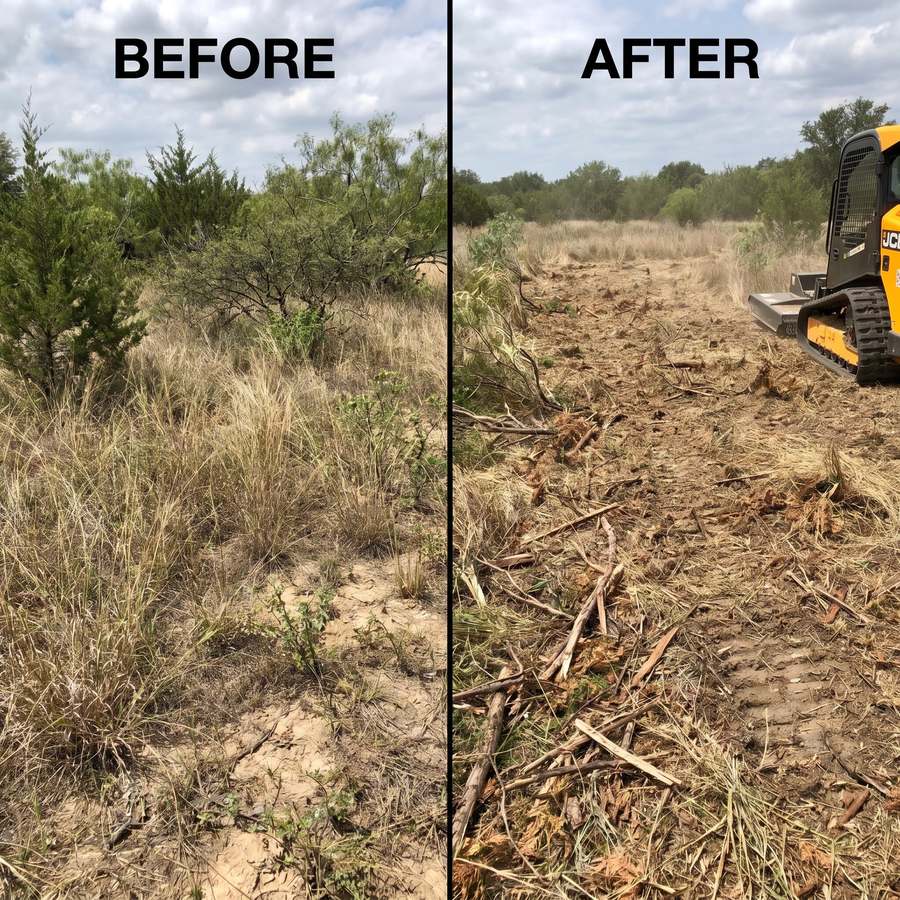
To turn overgrown Central Texas land into productive pasture, forestry mulching is usually the best first step — it clears cedar and brush while leaving a mulch layer that protects the soil and helps grass establish. Follow with seeding or letting natives recover, plus a regrowth plan. Dozing to bare dirt invites erosion and weeds.
The Pasture Problem in Central Texas
Rangeland here doesn't stay open on its own. Without management, Ashe juniper and brush march across it — shading out grass, drinking up soil moisture, and cutting your usable grazing acres year after year. Reclaiming that land is one of the best returns a rancher can get, but how you clear it decides whether you get productive pasture or a bare, weedy, eroding mess.
Why Mulching Beats Dozing for Pasture
Dozing cedar into piles tears up the topsoil, leaves the ground bare and compacted, and sets you up for erosion and a flush of weeds — plus you've got piles to burn or haul. Forestry mulching grinds the cedar and brush in place and leaves a chip layer that protects the soil, holds moisture, and feeds the ground as it breaks down. For establishing grass, that protected, moisture-holding surface is exactly what you want — and it's usually cheaper than dozing-plus-hauling.
The Steps to Productive Pasture
It's a sequence, not a single pass. One: mulch the cedar and brush to open the canopy and let sunlight hit the ground. Two: give it a season — in many Central Texas pastures, native grasses in the seedbank return on their own once the cedar's gone and the light's back. Three: seed if you want a specific forage or the native return is thin. Four: manage the regrowth before cedar seedlings re-establish. Skip that last step and you'll be reclaiming the same acres again in a few years.
The Water Bonus
Clearing cedar for pasture pays off twice. Every mature juniper you remove stops drawing down soil moisture — a single tree can transpire around 33 gallons a day. On the right ground, removing dense cedar has measurably improved soil moisture and even spring flow. More grass and more water from the same acres.
Timing and Managing Regrowth
The late fall through winter window is ideal for the clearing work, setting you up for spring green-up. Then stay ahead of the cedar — our guide to slowing cedar regrowth covers keeping it from taking your pasture back. Ready to reclaim some acres? Send photos and we'll give you a plan and a ballpark.