Yes — mature Ashe juniper (cedar) is a major water drain. A single tree can transpire roughly 33 gallons a day, and its canopy intercepts up to 40% of rainfall before it reaches the soil. On the right ground, removing dense cedar has measurably increased spring flow.
Your Central Texas springs are drying up, and you've probably blamed the drought. But mature Ashe juniper trees pull roughly 33 gallons of water per day from your soil while intercepting up to 40% of rainfall before it even reaches the ground. Here's what actually happens when you remove them.
Key takeaways
- A mature Ashe juniper can transpire roughly 33 gallons of water per day — significantly more than a comparably sized live oak — making dense cedar stands a measurable drain on Central Texas water.
- Juniper canopies can intercept up to 40% of annual rainfall before it ever reaches the soil.
- Removal studies show real results: a Seco Creek case saw a 20% increase in spring flow after clearing 80% of cedar canopy; a Medina County study reported roughly 35,000 gallons of water per acre per year gained after cedar removal.
- Results vary by site — shallow soils over permeable karst respond best; some deeper-soil sites show limited groundwater gains.
- Method matters: forestry mulching protects soil structure and maximizes the recharge benefit of clearing.
For Central Texas landowners and ranchers, water is everything. Springs dry up, stock tanks drop, and grass thins out — often blamed on drought alone. But dense stands of Ashe juniper and Eastern redcedar quietly compound the problem year-round, drawing down soil moisture and intercepting rainfall before it can recharge the aquifer below. Understanding how these trees affect the water cycle — and what removal actually delivers — is the first step toward managing land with a purpose.
The "33 Gallons a Day" Claim: What Research Actually Says
The number gets cited constantly in landowner circles: a mature Ashe juniper transpires 33 gallons of water per day. According to Texas A&M AgriLife Extension research, that figure is credible — and the comparison makes it more striking. A similarly sized live oak transpires around 19 gallons per day. That's nearly double the water use from a single cedar tree.
Raw transpiration numbers alone don't tell the whole story. Actual evapotranspiration from a stand of cedars depends on leaf area, available solar energy, and soil moisture. During peak drought stress, both cedar and grass reduce their water use. But here's the critical difference: Ashe juniper is an evergreen. It keeps pulling water from the soil in January when grasses are dormant. That year-round demand is what makes the 33-gallon figure so consequential on the Edwards Plateau.
Two Trees, One Water Problem
Central Texas doesn't have just one invasive juniper problem — it has two. Ashe juniper and Eastern redcedar are both reshaping the hydrology of Hill Country rangelands, though they arrived by different paths and behave slightly differently on the landscape.
Why Ashe Juniper Dominates Central Texas
Ashe juniper (Juniperus ashei) is native to the Edwards Plateau. The problem is density, not presence. Fire suppression, overgrazing, and decades of land-use change have allowed cedar to spread far beyond its historical footprint. It's identified as one of the most significant rangeland problems in Texas, with negative impacts on forage production, wildlife habitat, and water. On heavily encroached land, cedar can replace diverse grass-forb communities with near-monocultures that shade out grasses and lock up the landscape water budget.
How Eastern Redcedar Compares
Eastern redcedar (Juniperus virginiana) is more common along the eastern edge of Central Texas but is expanding aggressively westward. Extension research notes that redcedar shares the same canopy structure, root behavior, and evergreen physiology as Ashe juniper — making it an equally serious concern. Both transpire year-round, both intercept substantial rainfall, and both establish deep root systems that outcompete shallow-rooted grasses for soil moisture.
How They Drain Your Water Table
Water loss from juniper encroachment happens through three connected mechanisms. Each one alone is significant; combined, they can seriously reduce how much rain actually reaches the aquifer.
Deep Roots Reach Where Grasses Can't
Juniper root systems extend far deeper than native grasses, allowing them to access soil moisture — and sometimes the water table itself — that grasses simply cannot reach. That deeper rooting is a primary reason juniper can transpire water year-round: it taps reserves that persist through dry seasons. On deeper soils, cedar holds a clear advantage, pulling moisture from depths grass roots never penetrate.
Canopy Interception: Up to 40% Lost Before Hitting Soil
Before a drop of rain reaches the soil, juniper canopies can capture and evaporate a substantial share of it. Ecohydrology studies show juniper canopies intercept up to 40% of annual precipitation — water that evaporates back into the atmosphere rather than soaking in. Grass canopies intercept far less. On a ranch that receives 28 inches of rain per year, that could mean over 11 inches of rainfall never reaching the ground at all.
Year-Round Transpiration vs. Seasonal Grasses
Native grasses go dormant. Cedar does not. During winter months — when grasses have stopped growing and their water demand drops to near zero — Ashe juniper and Eastern redcedar keep pulling moisture from the soil and transpiring it into the air. This year-round demand means the soil never gets a true recovery period, which reduces the long-term storage available to recharge springs and aquifers.
What the Research Shows After Removal
The theoretical case for clearing cedar is strong. But field data matters more to a rancher deciding whether to invest. Two well-documented Texas studies give the clearest picture of what actually happened when juniper came out.
Seco Creek: 20% Spring Flow Increase
Near Hondo, Texas, a case study tracked a Seco Creek watershed where 80% of the cedar canopy was removed from an eight-acre tract. The result: a 20% increase in flows from a nearby spring — a measurable, real-world outcome, not a modeling projection. The spring responded to the removal, which tells landowners that on the right geology, clearing juniper can translate directly into recovered water.
Medina County: Water Yield Gains Per Acre
A separate Medina County study focused on juniper removal while leaving oaks and other shrubs in place. Research on a 40-acre watershed showed an average increase in water yield of roughly 35,000 gallons per acre per year after regrowth cedar was removed. Because the study retained other woody vegetation, the water gains were attributable specifically to juniper removal — not total brush clearing. It strengthens the case for targeted cedar management as a water strategy, not just a forage or aesthetics play.
Site Conditions Determine Your Results
The research is compelling, but it comes with an honest caveat: not every property sees the same results. The link between brush removal and water yield is strongest where specific site conditions exist.
Where Clearing Has the Strongest Impact
- Shallow soils over permeable karst or fractured limestone — water moves quickly from surface to aquifer
- High existing juniper canopy density — the more interception and transpiration now, the more that can be recovered
- Proximity to springs, seeps, or surface water — signs that subsurface flow is already active
- Rainfall in the 20–35 inch annual range — semi-arid conditions where even modest ET reductions create proportionally large streamflow gains
When Results May Be Limited
Deep clay soils, very low annual rainfall under 14 inches, or sites where removed juniper is quickly replaced by other transpiring shrubs may see limited groundwater benefit. If vegetation re-establishes at similar ET rates after clearing, the hydrological gains can be minimal. This is why follow-up management after clearing matters as much as the initial removal.
Land Clearing Methods That Protect Water Recharge
How cedar is removed affects whether the water benefits actually materialize. Heavy equipment that compacts soil or leaves it bare can increase runoff and reduce infiltration — working against the entire goal of the operation.
Forestry Mulching: Moisture Retention Built In
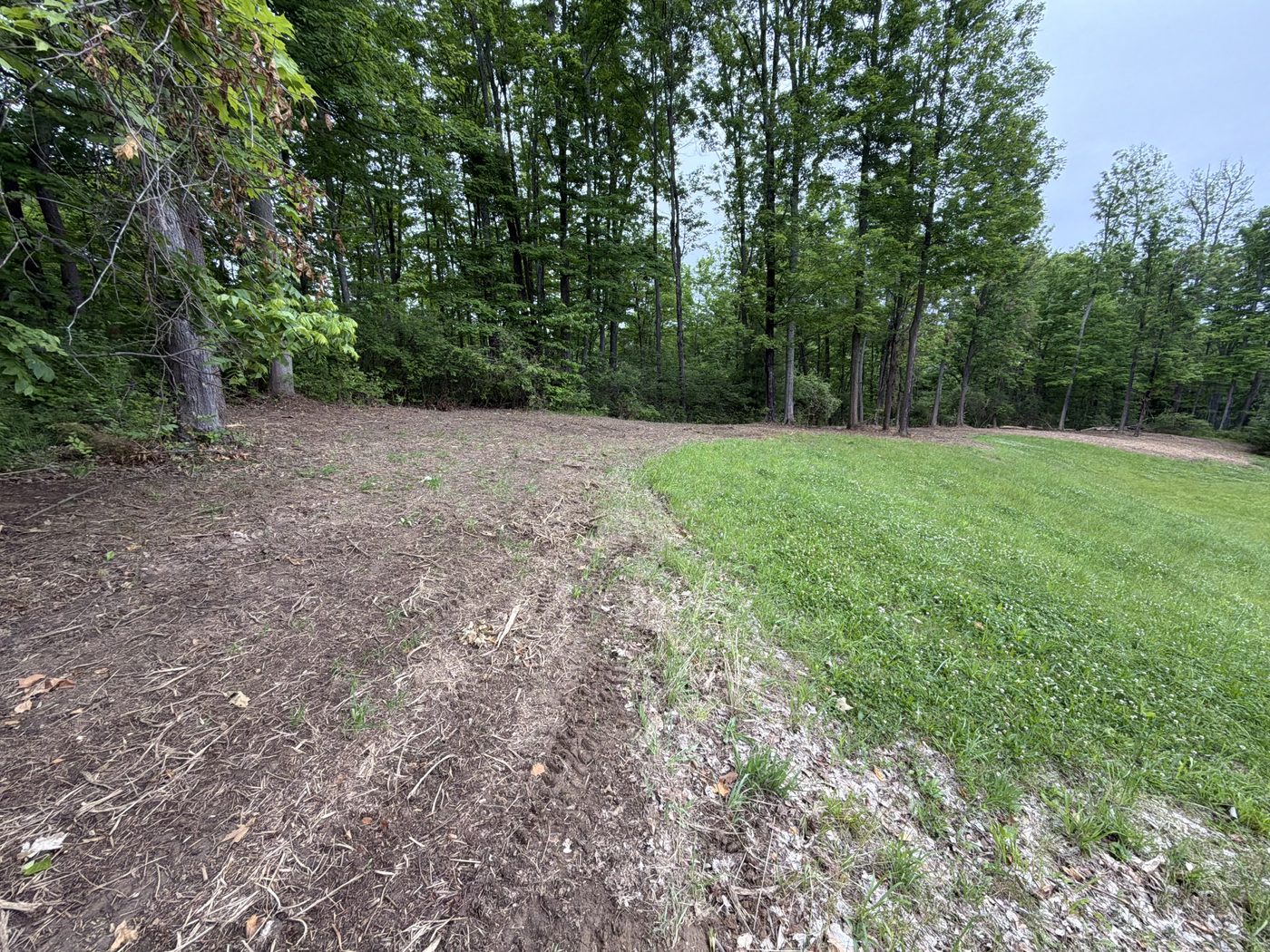
Forestry mulching grinds cleared trees and brush directly into a layer of mulch on the soil surface. That mulch layer slows runoff during heavy rains, reduces evaporation from bare soil, and creates conditions where native grasses can establish quickly. CHEW operates across Central Texas using forestry mulching as a primary clearing method — well-suited to properties where protecting soil structure and promoting groundwater recharge are the priority. Compared to root-plowing or dozing, mulching leaves the infiltration capacity of the land largely intact, which is critical on karst terrain where the path from rainfall to aquifer is short. (For more on keeping cedar from coming back, see our guide to slowing cedar regrowth.)
Clear Strategically — Your Aquifer Depends on It
Clearing cedar without a plan is just as risky as ignoring it. Landowners who see the strongest results — recovered springs, fuller stock tanks, better grass — tend to approach juniper management with the same deliberateness they bring to grazing rotation or wildlife habitat work: identifying areas with the right soil and geology, targeting high-density cedar stands, using clearing methods that protect soil integrity, and following up to prevent juniper from re-establishing before grass has a chance to root in.
The water-table connection is real, the research backs it up, and the tools exist to do the job right. The question for most Central Texas landowners isn't whether to manage cedar — it's how to do it in a way that actually moves the needle on water availability rather than just creating a cleared field that juniper reclaims in five years.