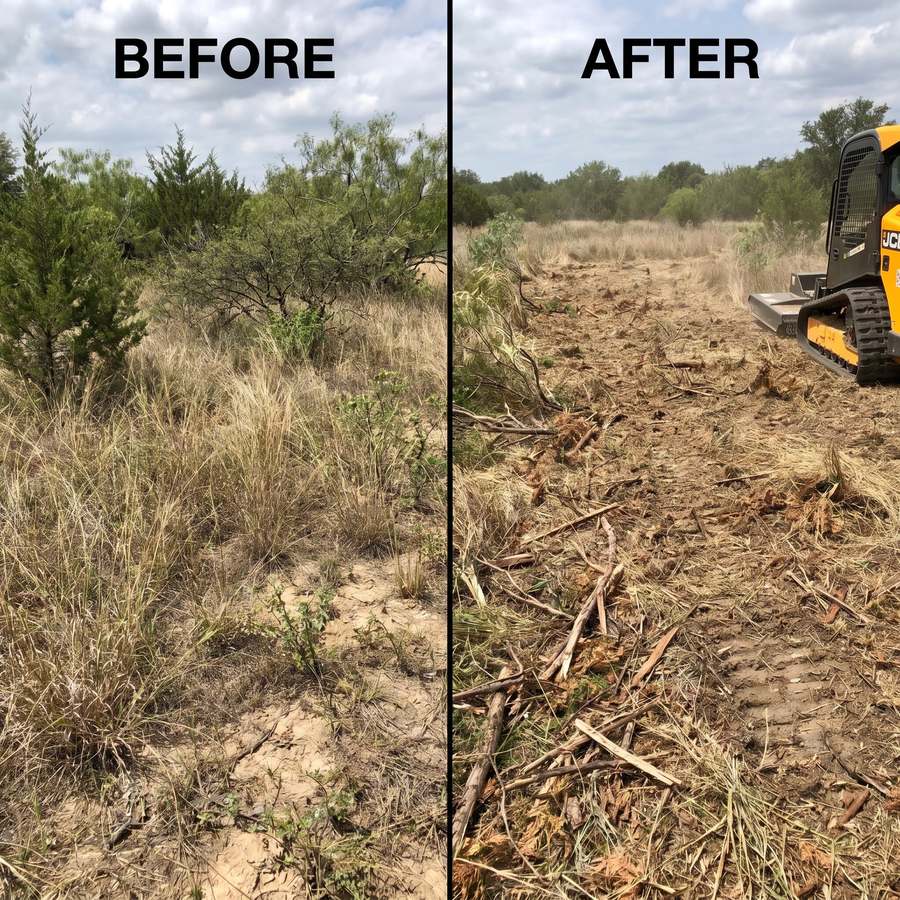
Cedar removal isn't just cleanup — it's one of the highest-return investments a Central Texas landowner can make. Yes, dense cedar drains water your springs and stock tanks need. But the fuller picture includes grazing capacity you're losing, wildfire fuel sitting near your house, and land value you're leaving on the table. Clear it right, and all four come back.
🎧 Prefer to listen? Play the podcast episode
What Cedar Is Actually Costing You
The number you hear most is that a mature cedar drains 30-plus gallons of water a day. The real range is more nuanced — most individual trees use closer to 1 to 6 gallons daily, while a dense, ten-foot-tall cedar bush can pull as much as 33 gallons on a hot day. Multiply that across a property with thousands of cedars and the water math still adds up fast: real studies near Hondo and in Medina County have measured spring flow jumping 20% and water yield rising by tens of thousands of gallons per acre per year after cedar removal. We've covered that research in full in our cedar & water table guide — worth a read if water is your main concern. But water is only one line item on the return. Here's the rest of what you're leaving on the table with a property choked in cedar.
Cedar Chokes Out Grazing Land
Dense cedar shades the ground and competes for the same limited water grass needs to establish and spread. Where cedar has taken over, grass simply doesn't compete — and that loss cuts directly into carrying capacity, the number of cattle, sheep, goats, or wildlife an acre can actually support. Fewer productive acres means fewer animals, tighter margins, and land that earns less every year you let it sit. Left alone, cedar spreads further each season, turning open rangeland into brush you can't even walk through.
The Fire Risk You're Living With
Cedar's oil content and dense, resinous foliage make it some of the most flammable ground cover in Central Texas. During a dry summer, a mature cedar stand next to your house, barn, or fence line is standing fuel for a fast-moving wildfire. Clearing cedar back from structures and property lines is one of the most direct ways to cut that exposure before fire season, and it's a case we've made in more detail in our wildfire defense guide.
Open Land Boosts Resale and Development Value
Overgrown cedar delays and complicates plans to build, farm, or sell. Buyers and developers consistently look for land that's ready to use — cleared, walkable, and easy to picture something on. A property that's already open saves the next owner time and money compared to one still choked in cedar, and that head start tends to show up as stronger interest and better offers when the property goes on the market.
How Removal Pays You Back — Shearing & Mulching
Not every clearing method returns the same value. Burning, chaining, and hand cutting all have a place, but shearing and mulching keep more of that value on your property. Cut material stays on-site as mulch instead of getting hauled off or burned, so the nutrients locked in those cedars feed the soil instead of disappearing. Mulching also works efficiently across the rocky, uneven terrain common throughout Central Texas, and skipping the burn pile means no burn permit, no smoke, and no added fire risk during the clearing itself.
Erosion Control While Grass Recovers
Freshly cleared ground is vulnerable — bare soil that just lost its cedar cover can wash out fast in a hard Central Texas rain before grass has a chance to root back in. The mulch layer left behind from shearing acts as a protective cover over that exposed soil, slowing runoff and holding topsoil in place while grass seed germinates. Most properties see native grass re-establishing within one to two growing seasons, and that mulch layer is a real part of what makes the recovery stick.
The Bottom Line: Cedar Removal as an Investment
Add it up and cedar removal isn't a landscaping expense — it's a return on four fronts at once: more grazing capacity, lower wildfire exposure, higher land value, and real water gains for your springs, creeks, and stock tanks. The gains build gradually, not overnight, but they show up reliably once the cedar's competition for water, light, and ground is gone. If you're weighing whether it's worth doing on your property, send a few photos of your densest cedar and we'll tell you straight what it'll take and what it'll open up.