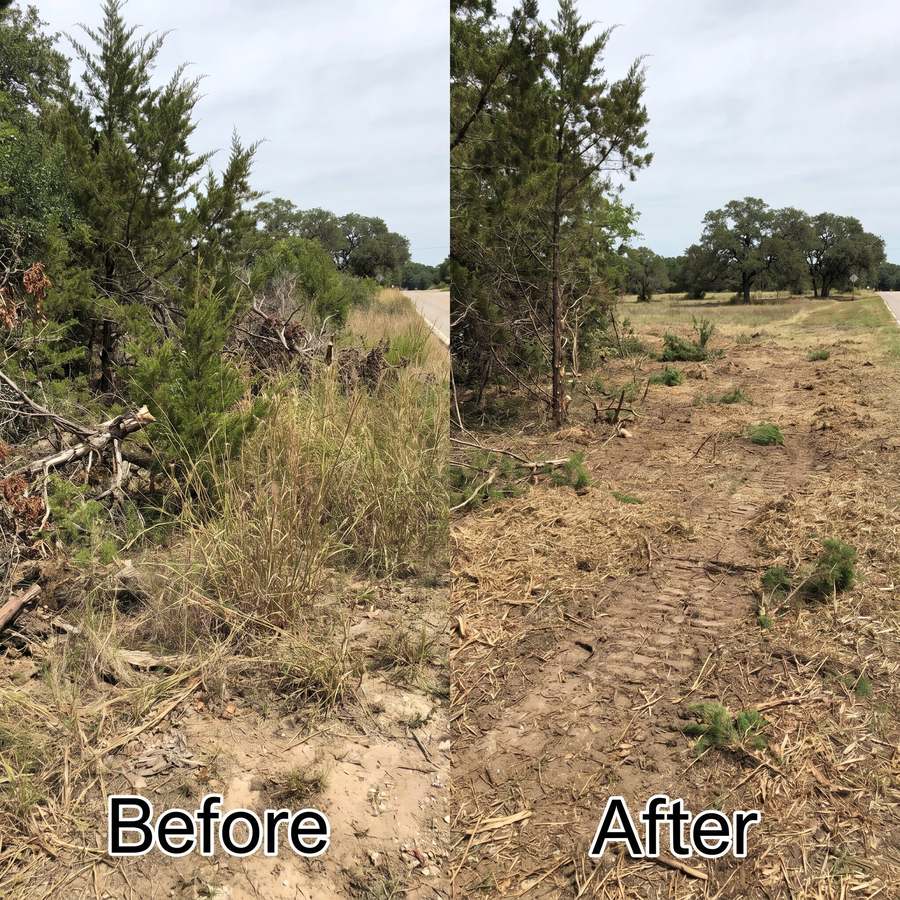
Never mow prickly pear. Mowing shreds the pads, and every fragment left on the ground can root into a brand-new plant — so one pass turns a patch into a field. Real control means removing the root crown a few inches below the surface, collecting every pad for disposal, and following up with herbicide on any regrowth. It's a management job, not a one-pass fix.
This is one I feel strongly about, because I've seen folks make their prickly pear problem five times worse in a single afternoon. If you've got prickly pear on your Central Texas property and somebody tells you to just mow it down — don't. Here's what actually happens, and what actually works.
Why You Should Never Mow Prickly Pear
Prickly pear spreads from its pads. When a mower hits it, it doesn't kill the plant — it chops it into dozens of pieces and flings them across your ground. Each of those pieces can take root and start a new colony. So mowing doesn't reduce prickly pear; it plants it. You go from a prickly pear problem to a prickly pear disaster in one pass, and you'll be fighting it across a much bigger area the next season.
How Prickly Pear Comes Back
Two things make this plant so stubborn. First, it re-roots from a single stray pad — miss one on the ground and you've left a seed for a new plant. Second, even if you clear off all the pads, it regrows from the root crown, which sits a few inches below the soil surface. Cut it at ground level and leave that crown, and it comes right back. That's why surface-only removal never finishes the job.
What Actually Works
Controlling prickly pear is a two-part effort — physical removal, then follow-up:
- Get the root crown out. Physical removal means lifting the plant and its crown from about 2 to 4 inches below the surface, not just knocking off the pads.
- Collect every pad. Any pad that comes loose has to be gathered and hauled off for disposal — never left lying on the ground, where it will re-root.
- Follow up with herbicide on the regrowth. Even with careful removal, some regrowth is normal, and a targeted herbicide treatment on that regrowth is what makes control stick. Spraying isn't something we do — that's a job for you or a licensed applicator — but it's the step that keeps the removal from being temporary.
Eradication vs. Management — Be Realistic
Here's the honest part: complete eradication of prickly pear is rare. Most landowners end up managing and controlling it rather than wiping it out entirely, and that's a perfectly good outcome — open, usable land you keep in check over time. Anyone who promises you a one-pass, gone-forever fix on prickly pear is setting you up to be frustrated.
How CHEW Helps
Our skid steer with a grapple can move, pile, and gather prickly pear for disposal — the heavy, thorny work of getting the pads off your ground and out of your way. That's the mechanical side, and it's real progress. But I want you going into it with the full picture: this is a management situation, not a one-and-done. We handle the clearing; you pair it with the crown removal and a herbicide follow-up (through a licensed applicator) for lasting control. I'd rather tell you that up front than have you call me frustrated later.
Dealing with mesquite on the same property? It's every bit as stubborn and comes back from the root too — here's how we handle mesquite.
The Bottom Line
Prickly pear is manageable, but it is not a one-and-done situation. The landowners who win against it go in with a realistic plan — physical removal done right, every pad hauled off, and a follow-up treatment — not just one pass with a machine and a hope. If you've got prickly pear, mesquite, or brush on your Central Texas property and want to talk through what a realistic clearing plan looks like, call or text me. I'll give you a straight answer before I ever quote a number.