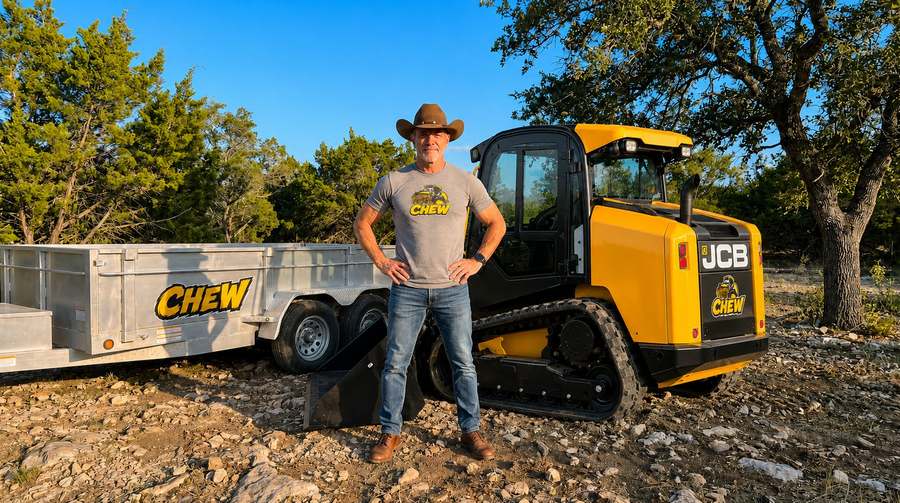
People ask what a clearing job actually looks like before they book one. Fair question — too many of you have hired someone, watched them show up late or not at all, and gotten a mess and a bigger bill than promised. So here's one real Central Texas job, start to finish, no marketing gloss.
The Call Before the Job
Every job starts the night before, not the morning of. I call or text to confirm we're still on, give a rough arrival window, and let the owner know if weather's going to push anything. That sounds small. It isn't — most of you have hired somebody who just didn't show, and never called to say why. If something on my end changes, you hear it from me before you're standing in your driveway wondering.
Walking the Property First
Before the JCB ever comes off the trailer, we walk the ground together. I want to see what you see, and you need to see what I'm about to do. That walk covers the same short list every time:
- Gate width and where the trailer and machine can actually get in
- Septic lines, wells, and sprinkler heads we need to work around
- Exactly where the fence line is — we clear to it, not through it, unless you've told me otherwise
- Anything overhead — low lines, guy wires, low limbs the machine needs clearance from
- Anything you want kept — a shade tree, a rock pile, a deer stand, a specific line of cedar for a wind break
This is also where the written quote either holds or gets adjusted — out loud, before the machine starts, not after.
Getting the Machine to Work
Once we're walked and agreed, the JCB comes off the trailer and the mulcher head goes to work. Central Texas cedar and caliche ground are not gentle on equipment or operators — it's dust, heat, and a lot of methodical back-and-forth passes, not one dramatic push through. Good mulching looks almost boring from the outside: steady, even, patient. The property looks like nothing's happening for the first hour. Then you turn around and there's open ground where a wall of brush used to be.
The Part Nobody Plans For
Every job has one. On this one it was a stretch of old barbed wire, buried and grown clean through a run of cedar along the back fence — invisible until the mulcher head found it. Wire wrapped in a mulcher is a real problem, not a minor one, so we stopped, walked the line, and hand-cleared it before the machine went back in. That's the honest part of this work: you don't know everything that's out there until you're in it. When something like that shows up, you hear about it from me on the spot — not as a surprise on the invoice. A few extra minutes of hand-clearing is just part of doing it right. A real scope change, the kind that adds real time, gets a conversation and a documented change order before we keep going, never an ambush after the fact.
Walking It Together at the End
When the work's done for the day, we walk it again — same as the start, just the two of us looking at what changed. That's when you find out if it matches what you pictured, and it's a lot easier to fix something on the spot than after I've loaded the trailer and left. I take after photos here too, partly for you and partly because I want a record of what the ground actually looked like when we left it.
The Invoice Goes Out That Night
You get the invoice the same day, matching the number we agreed on before I ever started — not a padded number, not a surprise line item for something we didn't discuss. If the job matched the walk-through, the price matches the quote. That's the whole point of quoting the job as a whole instead of by the hour: you know the number going in, and I don't get to move it on you after the fact.
The Bottom Line
None of this is complicated, and that's kind of the point. Show up when you said you would. Walk it before you touch it. Handle the surprises honestly instead of hiding them in the bill. Leave the ground the way you'd want your own to look. If you've had a different experience with a contractor before — and most Central Texas landowners have — that's exactly the gap CHEW was built to close. Curious what your property would take? Send a few photos or see the honest math on DIY vs. hiring it out, or just call and we'll walk it together like every other job.