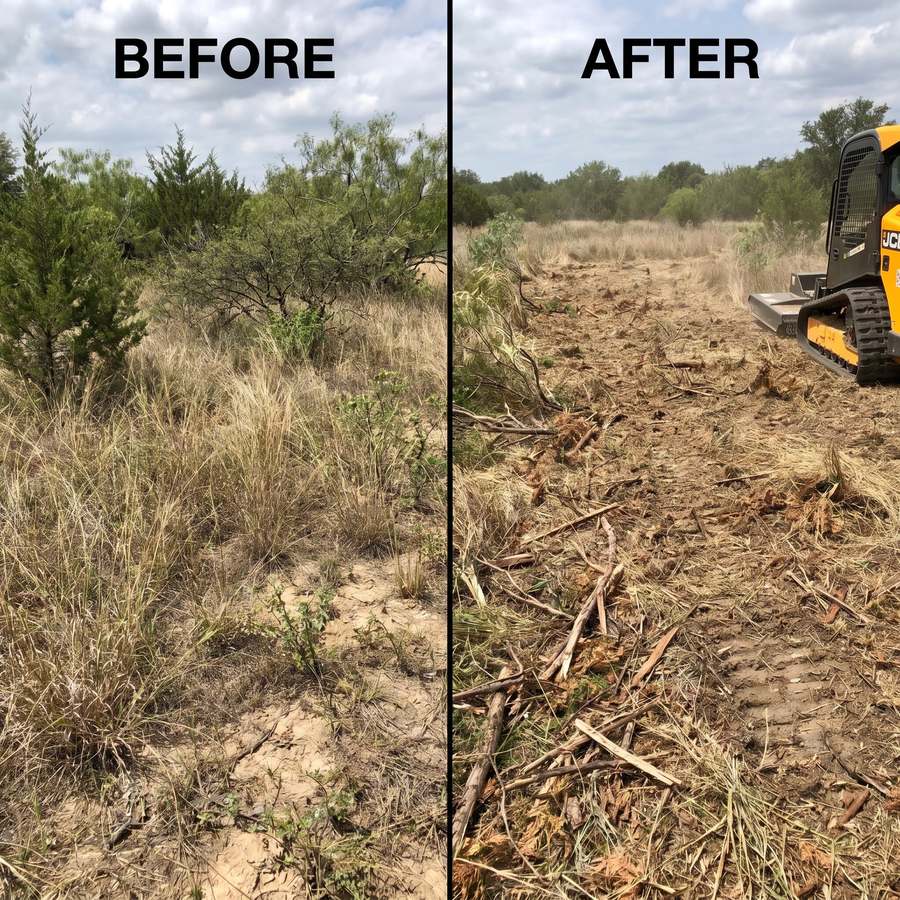
Brush hogging mows tall grass, weeds, and light brush with a rotary cutter — fast and cheap for keeping open land maintained. Forestry mulching grinds standing brush, saplings, and whole trees into mulch and reclaims densely overgrown land for good. In short: brush hogging maintains open land, mulching reclaims overgrown land.
What Brush Hogging Is
A brush hog (or rotary cutter) is a heavy-duty mower pulled behind a tractor or run off a skid steer. It knocks down tall grass, weeds, briars, and light woody brush up to roughly an inch or two thick. It's a maintenance tool — it cuts growth to a few inches off the ground but doesn't remove roots or handle real trees. Think of it as mowing a field that's gotten out of hand, not clearing a woodlot.
What Forestry Mulching Is
Forestry mulching uses a drum with carbide teeth to grind standing vegetation — heavy brush, cedar, saplings, and trees up to a solid diameter — into a layer of mulch right where it stood. It doesn't just cut growth, it eliminates it and reclaims the ground. One pass turns an impassable, overgrown tangle into open, usable land with a protective chip layer left behind. That mulch layer actually feeds and protects the soil.
What Each One Handles
Reach for brush hogging when you've got open pasture, a field, or a right-of-way with tall grass and light brush that just needs knocking back — and you plan to keep it maintained on a schedule. Reach for forestry mulching when the growth is too dense or too woody to mow: cedar stands, thick brush, saplings, and trees. If a brush hog would just bounce off it or get stopped, it's a mulching job.
Cost and Pace
Brush hogging is cheaper per acre and faster because it's a lighter task — but it's recurring, since the growth comes right back without root removal. Mulching costs more up front because it's doing far more work, but it resets the land for years, not weeks. Both are quoted after a site visit with a minimum job price; the density and terrain of your specific property drive the number.
How to Decide
Ask what your land is doing now. Open and grassy, just overgrown? Brush hogging. Wooded, choked with cedar, or you can't walk through it? Forestry mulching. Many Central Texas properties need mulching first to reclaim the land, then occasional brush hogging to keep it open — the two work together. Not sure which yours is? Send a few photos and we'll tell you straight.