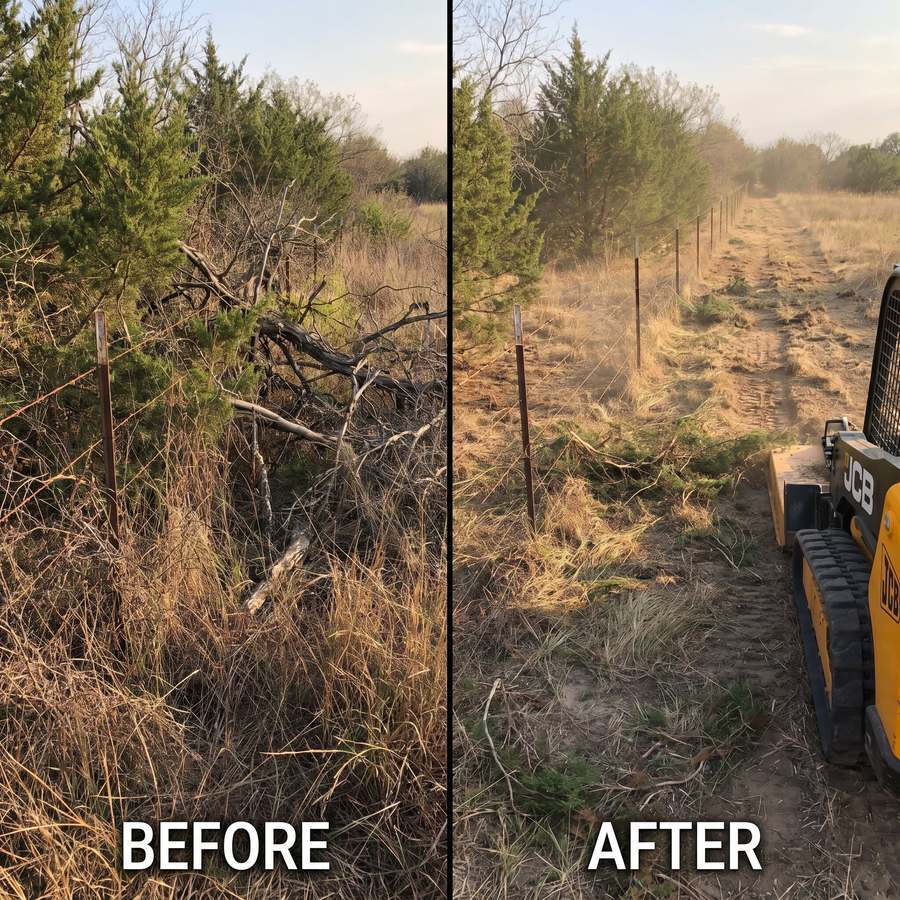
In most rural Central Texas counties you generally don't need a permit to clear brush and trees on your own private property. But there are real exceptions — floodplains, wetlands, creeks and waterways, endangered-species habitat, city limits, HOA or deed restrictions, and burn bans. Always verify with your county and city before you clear.
The General Rule
Texas leans strongly toward private property rights, and most unincorporated rural land in Coryell, Bell, and Lampasas counties can be cleared without a specific clearing permit. If you own rural acreage and you're mulching brush and cedar on it, you're usually in the clear. But "usually" isn't "always," and the exceptions below carry real consequences — including federal ones — so this is worth ten minutes of checking before any equipment shows up.
The Exceptions That Actually Matter
Floodplains and waterways. Clearing in a FEMA floodplain, or near creeks, rivers, and other waters, can trigger county floodplain rules or federal Clean Water Act requirements. Wetlands. These are federally regulated and not always obvious on the ground. Endangered-species habitat. This is the big one in our area — see below. City limits and ETJ. Inside a city or its extraterritorial jurisdiction, tree and clearing ordinances often apply. HOA and deed restrictions. Private rules can restrict clearing even where the county doesn't. Utility easements. You may not control what happens in a recorded easement. Burn bans. Not a permit, but they affect how you can dispose of debris.
The Golden-Cheeked Warbler — Know This One
Central Texas is core habitat for the golden-cheeked warbler, a federally endangered songbird that nests in mature Ashe juniper mixed with oak. Clearing that specific habitat — mature juniper-oak woodland — can carry exposure under the federal Endangered Species Act, particularly during the spring nesting season (roughly March through summer). This is not something to guess about. If you have mature, tall cedar-and-oak woodland, check with the U.S. Fish & Wildlife Service or a qualified biologist before clearing. Mulching young cedar and brush in open or previously worked ground is a very different situation from clearing established old-growth habitat.
Who to Call to Verify
A few quick calls settle it: your county (floodplain administrator and development office), your city if you're in or near city limits, the U.S. Fish & Wildlife Service or Texas Parks & Wildlife for habitat questions, and your HOA or deed records for private restrictions. Rules genuinely vary by county, city, and even parcel, so verify for your specific property rather than relying on what a neighbor did.
How We Help (and What We Won't Do)
We're not attorneys and this isn't legal advice — but we've worked this ground a long time, and we'll flag anything on your property that looks like it deserves a check before we start: habitat that looks like warbler country, creek and floodplain areas, easements. We'd rather pause and have you confirm than put you at risk. You verify locally; we clear it right. When you're ready, send photos and we'll take a look.