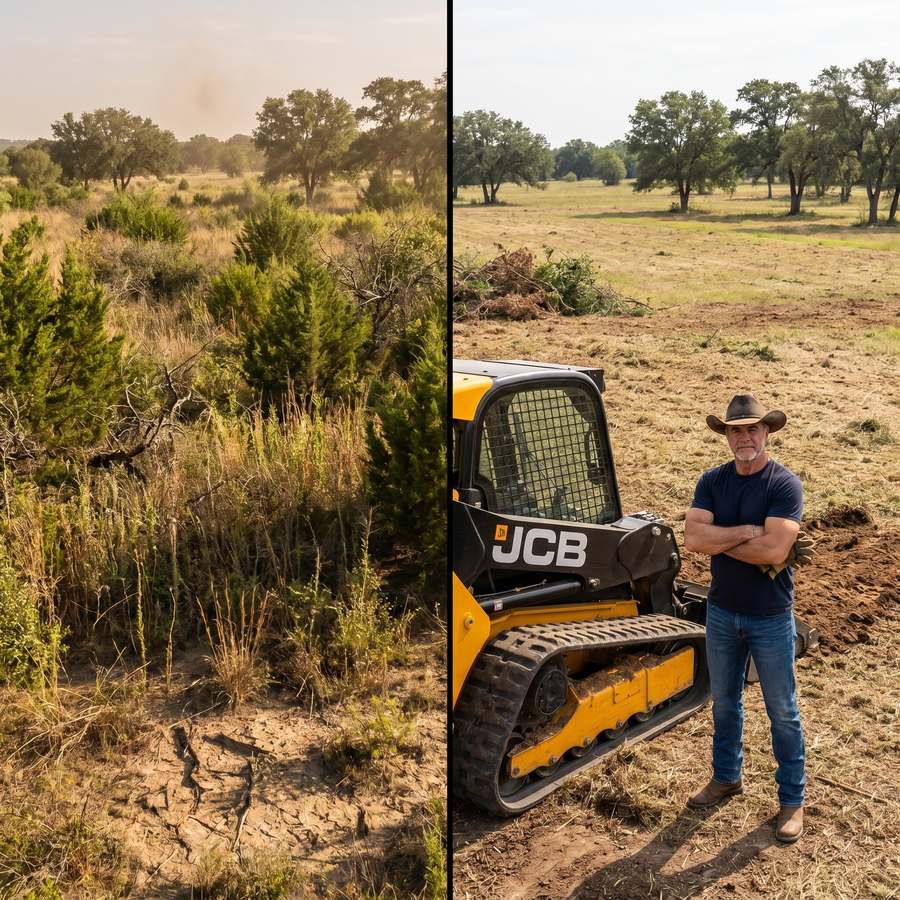
“Land clearing” is the umbrella term for removing vegetation from a property; forestry mulching is one method of doing it — grinding growth in place into mulch. Traditional clearing (dozing, raking, and hauling) strips everything down to bare dirt. Mulching leaves a protective chip layer behind. Which you need comes down to your end goal.
They're Not Opposites — One Contains the Other
People compare these as if they're two competing services, but land clearing is the objective and forestry mulching is one of several ways to achieve it. If your goal is to remove unwanted vegetation, "land clearing" describes the outcome; the real question is which method gets you there best for your property and your plans.
The Main Methods of Land Clearing
Traditional mechanical clearing uses a dozer or skid steer with a grapple or root rake to push over, pile, and haul off vegetation — leaving bare, graded dirt. Forestry mulching grinds the growth in place into mulch. There's also hand clearing for small or sensitive areas, and controlled burning where permitted. Each leaves the land in a different state and costs differently.
Where Mulching Fits Best
Mulching shines when you want the land opened up and usable without stripping it bare: reclaiming pasture, clearing cedar, improving access, cutting fire risk, or restoring wildlife habitat. It's a single-machine, single-pass operation, so it's usually faster and cheaper than dozing-plus-hauling, and it protects your soil instead of tearing it up. There's no burning and nothing to haul off.
When You Need Full Clearing to Bare Dirt
Some jobs genuinely need traditional clearing: a building pad or foundation, a pond site, a new road bed, or anywhere you need clean, graded, root-free dirt to build on. In those cases mulching alone isn't enough — you need material removed and the ground shaped. That's site prep, and it's a different scope than opening up overgrown acreage.
The Cost and Soil Trade-off
Dozing and hauling costs more (more equipment, more passes, disposal fees) and leaves soil compacted and exposed. Mulching costs less on most overgrown-land jobs and leaves a chip layer that holds moisture and fights erosion. For the majority of Central Texas landowners just trying to take their property back from cedar and brush, mulching is the better tool. When you're building, full clearing earns its keep. Every job is quoted as a whole after a site visit — here's what drives the price.